



Was the famed “Outlaw Thanksgiving” in Brown’s Park history or simply a tall tale? According to Ann Bassett, the “Queen of the Cattle Rustlers,” it was a Thanksgiving feast for the ages, hosted by none other than Butch Cassidy and the Wild Bunch.
The exact date cannot be confirmed, although Bassett insisted the grand dinner took place in November 1895. Historians, however, are quick to point out that court records show Butch Cassidy was serving time in the Wyoming State Prison in Laramie during that period. More likely, the legendary feast took place a year later, in 1896.
Regardless of the precise date, the setting was undisputed: Brown’s Park in northwest Colorado. Stretched along the Green River, this remote high-desert valley features rolling grassland, rocky mesas and narrow canyons. Known for its mild winters and sparse population, it was a place of respite for weary criminals and a plotting ground for their next adventure. But it was also a community. In this isolated valley, a unique and pragmatic coexistence flourished. Local ranchers and residents did not turn the outlaws in, even when substantial rewards were offered for their capture.
This extraordinary Thanksgiving was the ultimate expression of that truce: The Wild Bunch, the Bender Gang and other desperadoes hosting a formal holiday feast for their local friends and neighbors.
The event was held at the Davenport Ranch. The hosts, shedding their outlaw personas for the evening, took on surprisingly domestic roles. As guests arrived, they were greeted at the door by Les Megs, Billie Bender and Elza Lay. Inside they were met with a startling sight: Butch Cassidy and the Sundance Kid were the servers. In the kitchen, the rustler Isom Dart oversaw the food preparation.
This was no rough-and-tumble campfire dinner. The invitation called for formal attire. Ladies arrived in their finest satin, silk and taffeta dresses. The men, both outlaws and ranchers, wore dark suits and white shirts with starched collars and sported groomed hair and waxed mustaches. To ensure the event’s elegance, the ladies of Brown’s Park had even pooled their resources, providing their best silver, china and linens for the tables.
Special food was ordered and brought in from the nearest “large town,” Rock Springs, Wyoming. Guests began the holiday dinner with cocktails and oysters. The main course featured roast turkey (supplied by rancher Tom Davenport) with all the fixings: chestnut dressing, giblet gravy, creamed peas, olives, pickled walnuts, sweet pickles, Roquefort cheese, mashed potatoes and cranberries. The grand finale featured pumpkin pie with fresh whipped cream and plum pudding with brandy sauce.
The evening was a picture of high-society civilization. Local John Jarvie — a beloved ferry operator, general store manager and innkeeper — offered the blessing. The evening ended with musical performances on the zither, fiddle, guitar and accordion, as well as literary readings.
Bassett, who attended with her sister Josie and family, captured the night’s charm. She wrote glowingly of Jarvie, one of the few guests from outside Brown’s Park.
“Mr. Jarvie should be given the place of honor for he was a darling,” she recalled. “He was jolly and gay and everyone young and old loved him.”
Her most surprising anecdote was of the party’s famous host, Butch Cassidy. It turned out that the man who could stare down a Pinkerton agent was terrified of formal dinner etiquette. She recounted how a flustered Cassidy, tasked with serving coffee, had to retreat to the kitchen for an urgent lesson.
Butch Cassidy poses with members of his band of outlaws, called the “Hole in the Wall Gang” after their hideout in Wyoming, for a photo in a studio in Fort Worth, Texas, sometime between 1880 and 1890. Pictured left to right are Harry Longabaugh (The Sundance Kid), Will Carver, Ben Kilpatrick, Harvey Logan (Kid Curry) and Robert Leroy Parker (Butch Cassidy).
Photo courtesy Denver Public Library Special Collections
Bassett’s writings explained the valley’s attitudes about the infamous visitors.
“Cassidy had not harmed nor otherwise bothered the people of our neighborhood,” she insisted. “If law officers wanted him, it was their place to take him, not ours. But if the law wishes to come (in) and make such an arrest, not one hand would have been raised to protect an outlaw.”
It was a temporary, civilized pause in an uncivilized time. A night of silk dresses, oysters and plum pudding, served by America’s most wanted men.
That is a party I would gladly attend! If you wish to tour Brown’s Park, do not miss the Hanging Bridge and the Gates of Ladore on the Green River, Ft. Davy Crockett and Dinosaur National Monument. Just across the Utah state line, you can visit John Jarvie’s Historic Ranch. It is easy to “see” those outlaws galloping through the valley, stopping at friendly cabins and taking a break from their public identities.
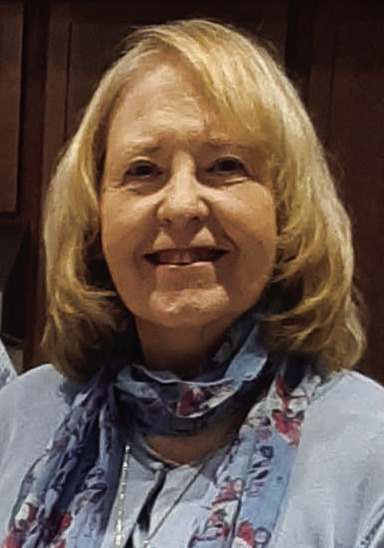
CAROLYN SNOWBARGER
Sources include gjsentinel.com, npshistory. com, “An Outlaw Thanksgiving” by Emily Arnold McCully, Utah.gov, and biography.com.
Carolyn Snowbarger is a retired educator. After teaching middle schoolers in Olathe, Kansas, for 28 years, she and her husband Vince moved to Washington, D.C. She directed the Teacher-to-Teacher Initiative at the U.S.Department of Education and then managed continuing education programs for the American Institute of Architects. The Snowbargers moved to Ridgway in 2013 after decades of San Juan family vacations.