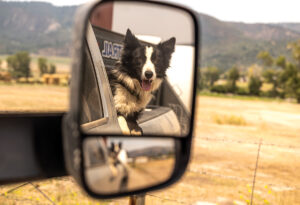



Most summers, Andrea Ingo and Mike Miller find a way to take a break in between irrigating, cutting and baling hay, moving cows and other chores.
But this summer’s persistent drought has thrown a wrench into any hope of a day off for the couple at the Fisher Ranch, one of Ouray County’s oldest cattle operations, dating back four generations.
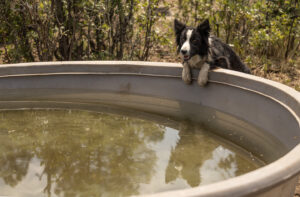
The ponds where their cows graze have dried up. And that means hauling water every other day, two or three loads a day.
It’s not that the water costs much — it’s the least expensive part of the problem. The filling station in Colona charges them $5 per thousand gallons.
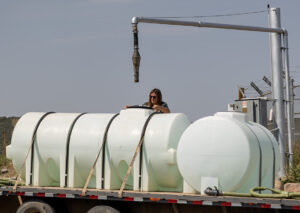
The bigger costs are the miles put on the truck, the wear on the tires, the diesel fuel, their time and energy.
“We’re sucking a lot of fuel down right now,” Andrea said as she pressed on the gas pedal and pushed the truck to climb the bumpy road up Log Hill Mesa.
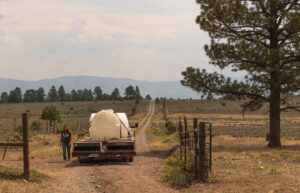
They have their cows spread out across properties, some grazing on U.S. Forest Service land in San Miguel County, others in pastures on Log Hill Mesa. The trip from the Fisher Ranch to the filling station in Colona, back up Log Hill Mesa to the cows and back down is at least 2 hours each trip. The tanks on their trailer hold 1,520 gallons. As of last week, they had made 72 trips this summer.
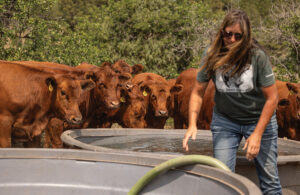
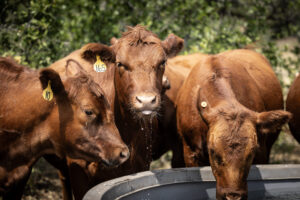
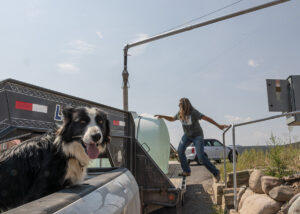
When Andrea arrives to deliver water to the cattle on Sunday, the heifers are waiting for her, near the dried-up pond. They wait patiently, standing at the edge of the water containers and watching as she unrolls the hose. Then they gratefully slurp the water when it climbs high enough for them to reach. Hunter the border collie watches the cows intensely, hiding under the trailer.
She and Miller don’t want anyone to feel sorry for them — this isn’t a pity party. But she does want folks to understand the challenges the ranching community faces in maintaining their livelihood in an especially difficult year.
It’s a compounding problem, all of these challenges happening simultaneously.
The forage in the high country is drying out, and that means moving the cattle more. The time between haying and moving cows is compressed. The irrigation water supply is low, stressing their field crops, and the corn fields where they normally graze the cows in the fall weren’t planted this year, due to lack of water. Hay prices are high, meaning they can’t really afford to buy what they can’t grow.
Andrea and her parents, Ed and Linda, sit at the kitchen table discussing how bad it is this year. Worse than 2002? Yep. Linda said it might even be worse than 1977, a terrible drought year just before Andrea was born.
Now, Andrea is 48, and she’s determined to keep the Fisher Ranch going. She loves the cattle, the stewardship of the animals and the land, and the rhythm of the work in the seasons.
“My mom has been a good cheerleader,” Andrea said. “Her saying, which is somewhat helpful and somewhat not, is, ‘Every day is one day closer to the next rain.’”