



The story of Ouray is rich, nuanced and full of interesting people and events.
That’s the surface-level message the audience could take away from the commissioned documentary for the city’s 150th anniversary, “Ouray: Echoes in the Canyon,” which premieres Friday night at the Wright Opera House.
But like the craggy mountains embracing this special place, Ouray has layers in its story — the people are one of its most precious treasures.
During the two years independent filmmaker Hank Braxtan spent taping interviews, gathering artifacts and weaving the city’s story together, he tunneled through the complex layers of Ouray’s history.
The miners who extracted precious metals from the mountains of the San Juan Triangle. The climbers, guides and off-road vehicle companies who use those same mountains now to make their living off visitors who come to play. The “born and raised” residents who still live here, the others who moved in later, the business owners. The people who work three jobs just to make ends meet to be able to live in paradise. And of course, the people this land belonged to first — the Utes.
“The entire point of this documentary is to tell the story of 150 years of the town … to understand how we got to where we are in modern times, and why this town is what it is,” Braxtan said. “You obviously can’t tell the history without talking about the indigenous peoples, and then … the mining influx, those are the two main drivers of why the town even exists.”
Northern Ute Tribe member and Uncompahgre Ute tribal historian Roland McCook talks about how the Ute tribes were removed from their lands in Western Colorado in the documentary. Courtesy Photonic Media/Hank Braxtan
“And now, it’s largely very touristy, like most mountain towns, but people forget, mountain towns weren’t established for people to come go on vacation,” he said.
Braxtan, a Colorado native who grew up in Fruita and moved back to the Grand Valley in 2018 after filmmaking in Los Angeles, has experience with a variety of projects, from commercials to horror films. He also has a passion for preserving history and storytelling.
He was tasked with not only showing the history of Ouray, but also illustrating what life is like now for those who live here and what Ouray has to offer.
Locals will notice familiar faces in the documentary — and everyone who was interviewed and wanted to be included in the finished film was featured. Longtime residents featured in the film include Cecilia Harvey, Rick Trujillo, Lou Hart, Father Nat Foshage and Louise Ficco. Braxtan also interviewed representatives from the Ouray Historical Society and a group of miners including Grady Colby, Bumper Williams, Jack Fay, George Munzing, Dick Zanett, Nick Basica, Christopher Yurgartis and Ernie Meruelo.
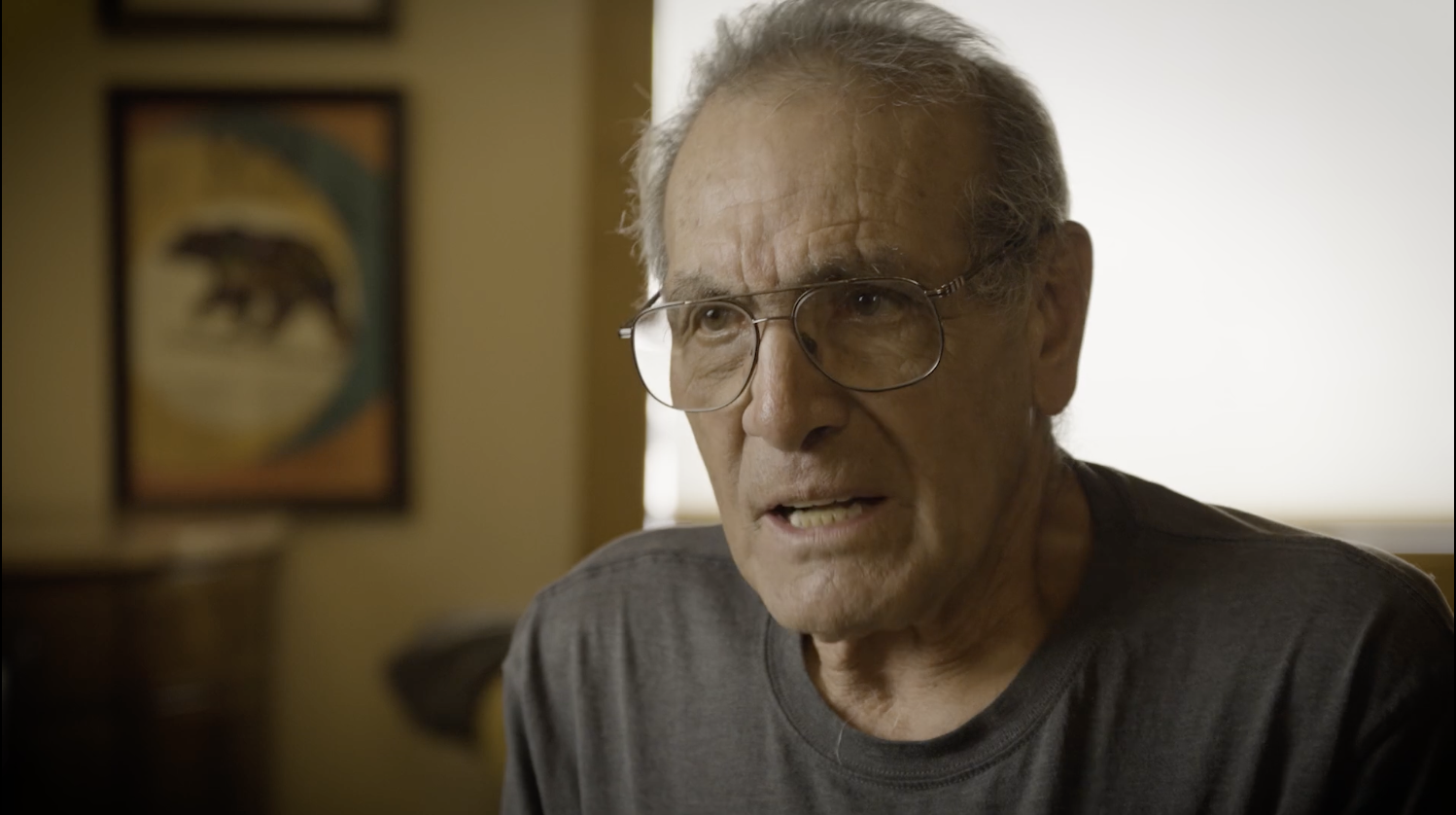
Longtime Ouray resident and geologist Rick Trujillo offered his perspective on the history of mining in Ouray for the film. Courtesy Photonic Media/Hank Braxtan
Braxtan also prominently featured Roland McCook, a member of the Northern Ute Tribe and an Uncompahgre Ute tribal historian, who gave perspective on how the indigenous people were driven from Ouray and the surrounding lands by white settlers.
The end result of Braxtan’s work is a 44-minute long documentary, which is roughly double the length he was contracted to produce.
Braxtan said he’s happy with how it turned out, he hopes the residents also enjoy it and he hopes to make more documentaries like this for other small towns.
Even before he was hired to produce the documentary, Braxtan frequented Ouray on family trips and appreciated visiting a few times a year, eating burgers at Maggie’s Kitchen, driving over Imogene Pass and enjoying the hot springs. But he said the project gave him a chance to know the city and its people more intimately and make more of a connection than he had as a tourist himself in the past.
“I felt like I was part of the town,” he said of his time spent getting to know people here.
He said the more time he spent with locals who wanted him to tell the story of Ouray, the more connected he felt. In some ways, he grew to feel protective of the place and the people, especially during the busy summer when the town is clogged with visitors.
“Now I see the other tourists and I’m a little annoyed,” he said, laughing.
Braxtan said he also appreciated the friendships he made during the project and the hospitality of those who participated, especially people who invited him into their homes.
In one case, he interviewed Ouray cartographer and drone photographer Mike Boruta, who provided the aerial video for the film. Not only did Boruta let him come to his house for the interview, he took him on hikes and helped hold a tripod during an interview Braxtan and his crew did with musicians Cie and Karisa Hoover after hiking up a mountainside.
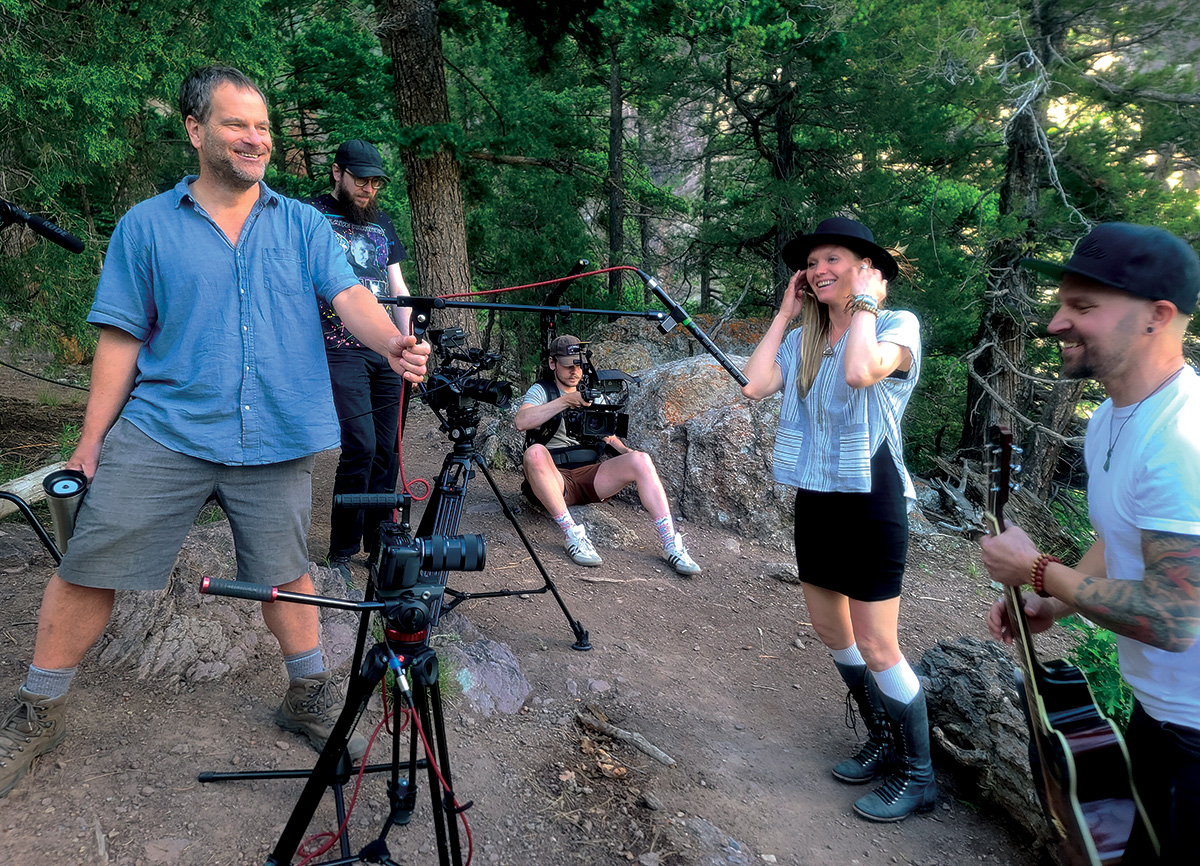
This “behind-the-scenes” photo shows Ouray resident Mike Boruta holding equipment for filming an interview for the documentary with musicians Cie and Karisa Hoover, after they and the film crew hiked up a mountainside for a better vantage point. Photo courtesy Hank Braxtan
As far as Boruta’s interview goes, Braxtan said he found it particularly poignant.
“I cried after I edited his interview,” he said, adding that he was touched by how much Boruta and some of the other film subjects care about Ouray.
The documentary will have its premiere screening at 7 p.m. Friday night at the Wright Opera House. Doors open at 6:30 p.m. Tickets are $5 at the door.
If you can’t make it on Friday night, “Ouray: Echoes in the Canyon” is expected to air on Rocky Mountain PBS at a future date, to be determined.